

Can you trust an LLM to be the “brain” behind AI agents executing critical business tasks?

Updated: Jun 24
Large language models are quickly becoming the reasoning layer behind many new AI agents.
They interpret requests, analyze context, choose tools, generate responses, and increasingly help decide what should happen next. In many agentic systems, the LLM is effectively treated as the “brain” of the agent.
That creates a serious enterprise question:
Can you trust an LLM to guide actions inside critical business processes?
The answer is: not by itself.
LLMs are powerful. They can summarize, classify, reason, recommend, and assist. But they are not deterministic authority systems. They can provide different answers to similar questions, and sometimes different answers to the same question. They may misunderstand context, overgeneralize policy, miss edge cases, or sound confident while being wrong.
That may be acceptable when the model is only giving advice.
It becomes risky when the model’s output can trigger actions inside customer service, billing, sales, support, IT operations, regulated workflows, or enterprise automation.
Intelligence Is Not Authorization
An AI agent may correctly understand what a user wants and still choose an action the organization should not allow.
A customer-service agent may understand a complaint, but that does not mean it should offer compensation.
A billing agent may detect a potential issue, but that does not mean it should approve a refund.
A support agent may summarize a case, but that does not mean it should close it.
An IT agent may identify a fix, but that does not mean it should change access permissions.
The problem is not only whether the AI is smart enough.
The problem is whether it has authority.
Intelligence is not authorization.
The Risk Is in the Action
For years, AI governance focused mainly on model outputs: hallucinations, unsafe content, bias, privacy, and data leakage.
Those risks still matter.
But AI agents introduce a different risk: execution.
Agents can call APIs, access systems, update records, send messages, trigger workflows, interact with customers, and participate in real business processes.
Once AI moves from answering to acting, organizations need stronger control over what actions are allowed before they happen.
Prompt instructions are not enough.
Monitoring after the event is not enough.
Trusting the model’s judgment is not enough.
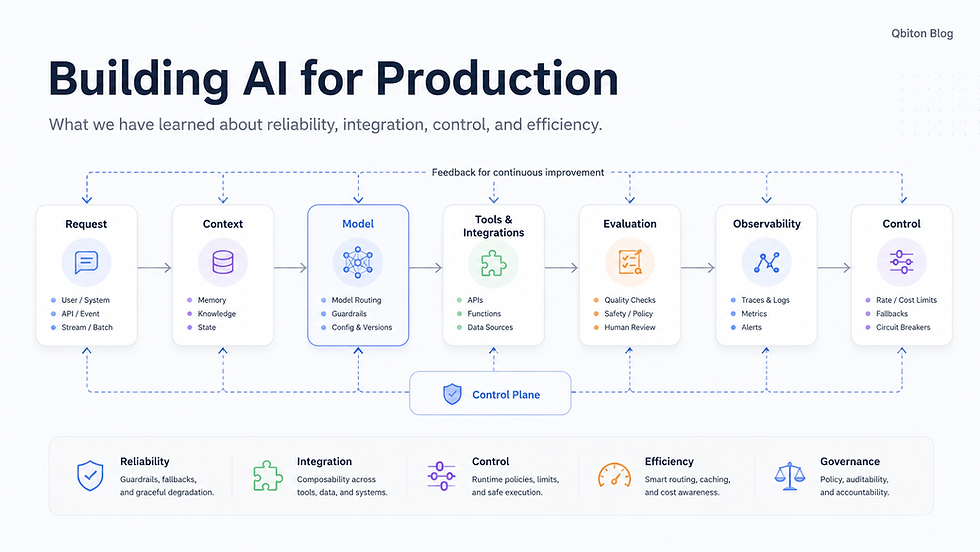
Critical business processes need a control point between AI-agent reasoning and business execution.
The Third-Party Agent Problem
The risk is not limited to agents built internally.
Many enterprise platforms are now adding AI assistants, embedded agents, automated workflows, and autonomous capabilities. These features may be useful, but they can also introduce a new layer of activity that organizations do not fully understand or control.
When a third-party system includes agentic behavior, the enterprise needs to ask:
What can it actually do?
Which systems can it touch?
Can it change data, trigger workflows, or affect customers?
Who is responsible if it takes the wrong action?
That is not only a technology question.
It is a governance, accountability, and business-risk question.
Business Processes Need More Than Model Confidence
The real issue appears when agents operate inside business workflows.
Customer service, billing, retention, support, sales, telecom operations, IT, and regulated processes all depend on policy, context, approval rules, and business judgment.
An action can be technically possible and still be wrong.
A model may recommend it.A tool may allow it.A workflow may execute it.But the business may still require control before it happens.
That is the missing layer in many agentic AI environments.
Models Should Advise. Authority Should Decide.
LLMs can play an important role. They can help analyze context, detect signals, summarize information, and recommend next steps.
But the final decision over critical business actions should not belong to the model alone.
As AI agents become more capable, enterprises need a stronger separation between reasoning and authority.
The model may help decide what makes sense.
The organization still needs to decide what is allowed.
Models advise. Authority decides.
At Qbiton, this is the gap we are focused on with Qbiton Runtime Authority (QbitonRA): helping organizations move toward runtime authority, governance, and enforcement for AI agents and non-human entities before actions are executed.


Comments